South Dakotan Chuck Todd Stepping Aside as NSA President, Marking 12 Years of Service to the Association
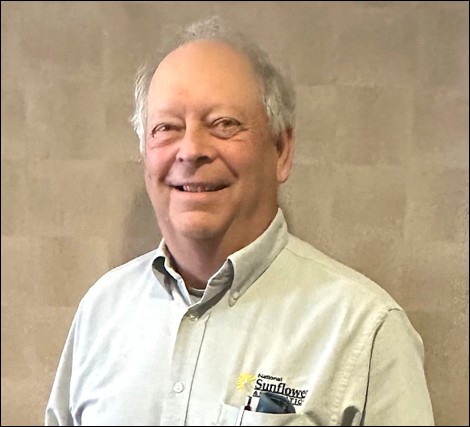 When Chuck Todd looks out over the fields near Onida, S.D., he sees more than just acres of sunflower ready for harvest. He sees decades of persistence and the growth of an entire industry. As he prepares to wrap up a 12-year term on the National Sunflower Association (NSA) Board of Directors and completes his stint as board president this December, Todd leaves behind a legacy defined by leadership, collaborative drive and a lifelong commitment to the crop.
Generational Farming
Chuck Todd’s path in agriculture began in 1975, stepping back onto the family farm alongside his father straight out of college. The mid-to-late 1970s presented tough farming conditions, but it was also during this period that sunflowers began making real inroads into central South Dakota. In those early years, growers were still working with mostly open-pollinated varieties, navigating a steep learning curve in terms of developing creative ways to plant and harvest.
As economic conditions shifted in the 1980s, Chuck adapted. He transitioned into the seed industry, taking a role with a seed company while continuing to farm on the side. That move launched a 25-year career as a sales manager for Mycogen Seeds, associating closely with producers across North and South Dakota.
Working on the seed side provided Chuck with a front-row seat to the development of modern-day sunflower hybrids. It also reinforced the crop’s practical value on his own farm. Sunflower became a steady staple in his crop rotation, offering a reliable option during lean economic years.
“Sunflower worked very well into a no till rotation,” Chuck reflects. “It gave us an extra crop that we could use for cash during those years when the cash farming was very difficult.”
Stepping Up to Serve
Chuck’s entry into leadership came naturally, spurred by a conversation with a friend serving on the South Dakota Oilseeds Council. When the board needed new voices to replace retiring members, he realized that making a real impact on the industry required stepping into the room where decisions are made.
After receiving an appointment to the South Dakota Oilseeds Council, Chuck qualified for representation on the National Sunflower Association Board of Directors. So, recognizing the importance of direct involvement, he stepped forward to serve on the national level as well.
Over his 12 years with the NSA, Chuck’s role grew from board member to executive leadership, culminating in his election as board president in December 2024. For Chuck, taking on executive roles meant guiding meaningful progress.
“One thing about being on the executive boards of any kind of organization is that it does involve more work, but you do have more influence, too,” Chuck notes. “You could influence the direction that the board takes with regard to meetings and involving everybody else, making sure everyone has a voice. I enjoy that interchange between the people you’re working with. I think it’s important to get everyone there involved.”
Throughout his leadership tenure, Chuck has prioritized inclusive governance. Whether presiding over executive sessions or working with committees, his focus remained on bringing diverse perspectives into the conversation. He sought to ensure that all growing regions and individual producers — regardless of farm size or location — were represented in NSA decisions and strategic priorities.
Todd points toward the strong interpersonal connections with fellow board members, NSA staff and industry partners among the most rewarding aspects of his term. By fostering open debate and balanced participation, he helped the NSA navigate industry shifts while maintaining a unified vision for sunflower research, market development and grower advocacy.
A strong point of the NSA board, Chuck notes, is the blend of grower and industry representation.
“It’s good that production people are meeting processing people,” he affirms. “As growers, sometimes we have to adjust on our end; and the industry folks, of course, realize that they have to sometimes make some changes on their end, depending on how our growing season is going. It’s just great to have all sides of the table like that.”
Chuck says one of the most challenging aspects to navigate has been getting policy going in the right direction. He witnessed how political unrest can often “paralyze” government personnel, causing policy makers and even researchers to be at a standstill. It can make it hard to keep showing up and trying to make a difference by directing research dollars and attention to advance sunflower.
“Government can be hard to move in the right direction. It is slow to move that big rock,” he explains. “So, you just got to keep plugging away at it and keep pushing on them. We have to just stay in the game and keep doing something — because food production matters for all Americans.”
Acreage Outlook
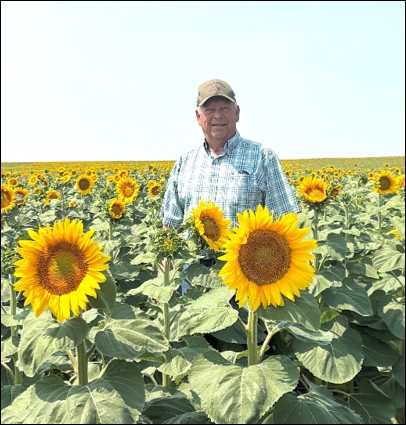 South Dakota farmers share a major role in the nation’s food production. Sully County, which Chuck Todd calls home, is the highest sunflower-producing county in the state. Sunflower has found a niche in his area as not only a good rotational option with wheat and corn acres, but simultaneously as a proven, reliable cash crop making growers some really good money over the last 20 years.
But Chuck, like all growers, knows that sunflower doesn’t come without its challenges. “Over the next five to 10 years, one of the challenges, I think, outside of the Dakotas is the marketability, because other states — particularly Kansas, Colorado and Texas — don’t have near the markets that we have here in this part of the country,” he observes. “So, the goal would be not only to get the acres up, but also find ways to get places nearby for the growers to deliver their crops. If we can find ways to get processing plants closer to the acres, it would be a lot easier to increase production, especially in those states.”
Staying Connected
As he prepares to step down from the board in December, Todd’s impact on the sunflower industry remains evident. From the early days of open-pollinated varieties to today’s high-yielding hybrids, his time spans pivotal chapters in Northern Plains agriculture.
“I’ll still be involved with the South Dakota Oilseeds Council and working with the growers here,” he remarks. “The big thing I’ll miss is just all the people that I’ve encountered. I’ve been on the research committee for all the years I’ve been on the NSA board, and I really enjoy working with the research. That’s what I’ll probably miss the most: just the interaction and the communication with all the people in the industry who I’ve gotten be good friends with.”
He says the real challenge ahead will be to stay creative on how to move the industry forward amidst a constantly changing economy. He strongly encourages his fellow growers to stay involved.
Chuck’s tenure on the NSA Board of Directors stands as an example of producer-led leadership — showing that when farmers actively participate in their industry organizations, the entire agricultural community benefits. While his term as NSA president is concluding, Chuck’s dedication to South Dakota agriculture and the sunflower community remains firmly planted.
“We’re going to have to be really creative to be able to keep good farmers on farms,” Chuck concludes. “I’d encourage all growers to keep being involved — and hopefully we can get the younger generation involved, whatever direction we’re going. It might be different than what we’re in now. No doubt what I was in was different than what my father’s was.
“I’m sure it’s going to change, but we do need to be involved in the change and direct it, and not just react to it.” — Sonia Mullally