By John Sandbakken*
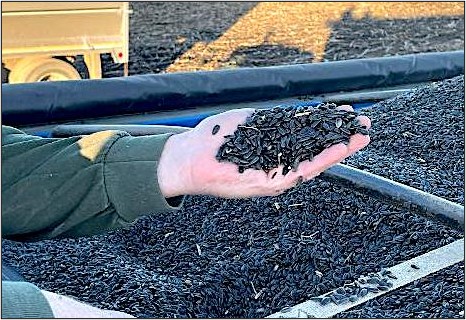 For sunflower growers, the question heading into 2027 is straightforward: Will sunflower prices offer enough return to compete with other crops and cover production costs?
With input costs remaining a concern, producers will need to sharpen their pencils, evaluate crop budgets carefully, and pay close attention to marketing opportunities. Crops that were profitable last year may not deliver the same returns in 2027.
Watching the markets will be important, both for taking advantage of rallies when selling old-crop seed and for locking in profitable new-crop prices. Growers who understand their breakeven costs and establish a marketing plan will be better positioned to manage price risk and protect margins.
The outlook presents both opportunities and challenges. Demand for sunflower oil is expected to increase, but larger carryover stocks and competition from other oilseeds could limit price gains. Ultimately, profitability will depend on local bids, realistic yield expectations, production costs, and premiums available for specific sunflower varieties.
Production & Stocks Will Influence Price Potential
In October, USDA released its first production estimate for the 2026 sunflower crop, projecting production at 2.3 billion pounds, down 1% from revised 2025 production of 2.34 billion pounds. Oil-type production increased by 11.4 million pounds and nonoil production by 2.5 million pounds from the previous year.
Planted acreage totaled 1.35 million acres, up 5% from 2025. Growers were expected to harvest 1.31 million acres, an increase of 4% from the prior year.
The October yield forecast of 1,761 lbs/ac was 100 pounds below the 2025 average. If realized, however, it would still rank as the fourth-highest U.S. sunflower yield on record. Lower yields were expected in California, Colorado, Kansas, Minnesota, Nebraska, North Dakota and South Dakota, while Texas was the only state forecast to produce higher yields than in 2025.
North Dakota, the leading sunflower-producing state, was forecast to produce 1.06 billion pounds, down 3% from 2025. Its expected yield of 1,740 lbs/ac was 217 pounds below the previous year. South Dakota's average yield was forecast at 1,959 lbs/ac, down 16 pounds from its record high in 2025. The next USDA yield and production estimates are scheduled for early January.
USDA reported old-crop sunflower stocks in all positions as of September 1, 2026, at 302.7 million pounds, up 45% from a year ago. All stocks stored on farms totaled 26.4 million pounds, and off-farm stocks totaled 276.4 million pounds.
Stocks of oil type sunflower seed stood at 263.4 million pounds; of that total, 20.9 million pounds are on-farm stocks and 242.5 million are off-farm stocks. Nonoil sunflower stocks totaled 39.3 million pounds, with 5.4 million pounds stored on the farm and 33.9 million pounds stored off the farm. Stocks of oil-type sunflower seed were 54% higher, with nonoil stocks 2% higher than last year. Both figures were in line with trade expectations.
Growers should keep a close eye on USDA supply estimates, processor buying activity and local bids. If inventories decline faster than expected, buyers may become more aggressive. If stocks remain large, forward-contract opportunities may become particularly important.
For growers planning 2027 acreage, these figures highlight the importance of using realistic yield expectations when comparing sunflower with corn, soybeans, wheat and other crops. A strong yield can support profitability at a moderate price, while lower yields can quickly erode margins. Farm-specific yield histories and conservative price assumptions should guide planting decisions.
What Early 2027 Contracts Tell Growers
Forward contracts provide a starting point for evaluating potential returns, but producers need to understand the terms and calculate what each offer means for their bottom line.
As of early November, 2027 new-crop high-oleic contracts were reported at $25.50/cwt on a cash basis and $25.00 under Act of God (AOG) terms at Cargill West Fargo and ADM Enderlin in North Dakota. Colorado Mills in Lamar, Colo., listed a $25.00 AOG contract.
USDA's October outlook projected a 2026/27 season-average sunflower seed price of $26.40/cwt. That figure provides a broader market reference, but is not a guaranteed price for 2027 production and is not directly comparable to a specific forward contract without accounting for delivery timing and terms.
Before signing a contract, growers should calculate their breakeven price using seed, fertilizer, crop protection products, fuel, machinery, labor, land and marketing costs. Comparing the net contract price with that figure provides a better basis for deciding whether an offer is profitable.
If you would like to sleep a little better at night during the growing season, maybe you should consider contracting sunflower with an AOG production clause. Confection and oil sunflower contracts offer AOG clauses. The AOG clause basically means the producer doesn’t have a production risk. Should drought, hail, insects, disease, etc., result in a yield loss and you don’t have enough production per acre to cover your sale, the AOG clause kicks in. You are only obligated to deliver what you produced, not what you contracted.
These “fail safe” contracts have become very popular with farmers throughout the production region. They provide an opportunity to “lock in” attractive prices now for fall delivery, and also remove that all-important factor of “price risk” in these very volatile times.
Another risk strategy is that rather than pricing the entire crop at once, growers may consider spreading sales across multiple opportunities as the market develops. The objective is to protect a profitable return without committing more hundredweight than the farm can reasonably produce.
Oil Premiums Can Improve Returns
For oil-type sunflower growers, the base bid is only part of the price calculation. Crush plants offer premiums for oil content above 40%, subject to their individual pricing schedules and contract provisions.
Sunflower is the only oilseed that pays premiums for oil content above 40%. Considering oil premiums that are offered at the crush plants on oil content above 40% at a rate of 2% price premium for each 1% oil above 40%, this pushes a contract with 45% oil content gross return 10% higher per cwt. The AOG $25.00 contract increases to $27.50, and the cash $25.50 contract moves up to $28.05.
That difference demonstrates why growers should compare complete pricing schedules rather than base bids alone. Oil content, processor-specific premiums and other settlement adjustments should be considered before estimating returns.
Genetics, weather and growing conditions influence oil content, yield and quality. Producers should consider hybrid performance and management practices when evaluating potential returns, while recognizing that no particular practice guarantees a specific oil test.
Before selecting a hybrid or signing a contract, growers should compare premiums, quality specifications and delivery terms. The best offer is the one that produces the strongest realistic net return, not necessarily the highest advertised base price.
Vegetable Oil Demand Offers an Opportunity
One encouraging development in USDA's outlook is its forecast for domestic sunflower oil use to increase 12% to 735 million pounds during the 2026/27 marketing year.
Sunflower oil may help meet food-market demand as more soybean oil is directed toward biofuel production. If additional demand leads to higher sunflower crush volumes and stronger processing margins, processors may have greater incentive to compete for seed. However, stronger oil demand does not automatically translate into higher farm prices. Inventories, transportation costs, processing margins and the value of sunflower meal also influence what buyers can pay.
Sunflower oil competes with soybean, canola and palm oil. Food manufacturers consider relative prices and availability when choosing vegetable oils, so growers should watch sunflower seed’s competitiveness rather than assume that rising overall vegetable oil demand will lift all prices equally.
For sunflower growers, stronger crush activity and improving local bids will be more-meaningful signals than demand projections alone. These indicators can help determine whether expanding oil demand is translating into better marketing opportunities.
Global Supplies Will Influence Domestic Prices
International production also affects the prices U.S. growers receive. The Black Sea region is particularly important to global sunflower seed and sunflower oil trade.
A smaller crop or trade disruption in major exporting countries could create opportunities for U.S. processors and exporters. Conversely, abundant global supplies can increase competition and limit domestic price gains.
Other vegetable oil markets matter as well. Changes in palm, soybean and canola production can shift international prices and influence the relative competitiveness of sunflower oil.
Growers should monitor these developments but avoid basing marketing decisions solely on overseas news. International price movements must translate into stronger demand for U.S. products before they benefit local bids. Transportation costs and competing supplies can weaken that connection.
Watching local prices alongside vegetable oil market trends will help producers determine whether global developments are creating a meaningful opportunity to sell old crop or contract new crop.
Confection Growers Face Different Market Conditions
Confection sunflower requires a different marketing approach because buyers place particular emphasis on seed size, appearance, uniformity and suitability for snack products.
USDA's October production report showed nonoil sunflower acreage at 115,200 acres, up 15% from 2025. September 1 nonoil stocks were up only 2% from a year earlier, a smaller increase than for oil-type seed.
These figures provide context but do not determine where confection prices will go. Demand, processor inventories, export sales and the volume of seed meeting quality specifications will influence the market.
Growers considering confection production in 2027 should identify potential buyers and understand contract specifications before planting. A larger crop does not necessarily mean abundant supplies of premium-quality seed, just as a smaller crop does not guarantee higher prices.
Producers should compare expected yields, quality requirements and contract prices with production costs. Returns depend on the amount of marketable seed and the price received for it, not simply total pounds harvested.
The 2027 Outlook: Protect Margins & Market with a Plan
The 2027 sunflower market offers potential demand growth but also supply-related risks. USDA expects domestic sunflower oil use to increase, while total sunflower seed supplies are projected to rise 3% and carryover stocks remain higher than a year earlier.
The pace of demand will be critical. Stronger crush activity, tighter competing vegetable oil supplies and favorable local bids could support prices. Slower demand or abundant global oilseed supplies could limit gains.
For growers, the priority is to turn market signals into decisions grounded in farm economics. Before planting, compare sunflower returns with competing crops, obtain current local bids, evaluate oil premiums and calculate breakeven prices. When considering forward contracts, understand delivery obligations and production-risk provisions.
Confection producers should focus on buyer specifications and quality premiums, while oil-type growers should monitor crush demand, oil content premiums and competition from other vegetable oils.
The size of the 2027 crop and the prices growers ultimately receive will depend on weather, production, inventories and demand. Remaining flexible, protecting margins, and marketing with a plan will be essential.
Sunflower can remain a valuable part of a diversified farm operation. Ultimately, success will come not simply from a stronger market, but from growers converting available prices, yields and premiums into positive per-acre returns.
* John Sandbakken is executive director of the National Sunflower Association.