North Dakota Weed Scientist Continues Search For Effective Herbicides in Sunflower — And for Use on Waterhemp as Well —
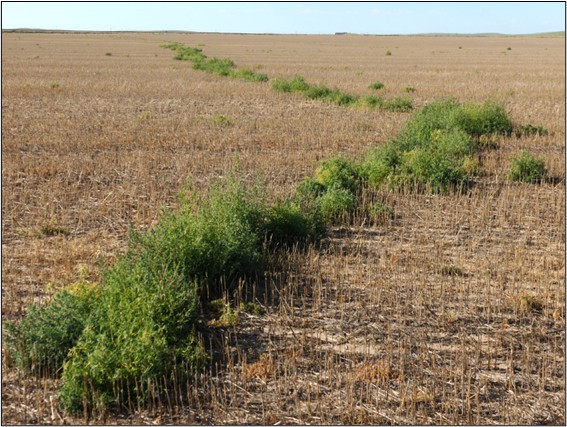
Jeff Oberholtzer is all too familiar with the noxious weed kochia. The Mohall, N.D., producer says it’s been a problem on his family farm for years.
“For us, kochia has become a big pain,” Oberholtzer affirms, echoing the stance of numerous other producers.
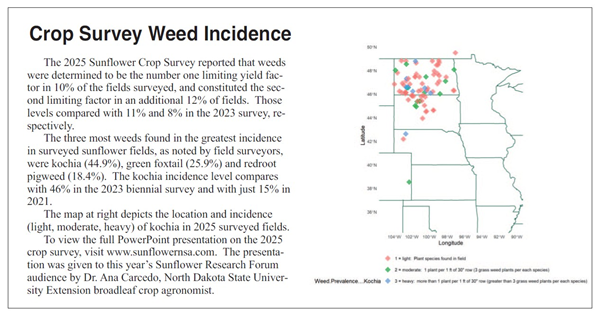
The Oberholtzers’ north central North Dakota sunflower fields, and the kochia that threatens to take them over, have been part of ongoing research by researchers at the NDSU North Central Research Extension Center in Minot. That research, led by weed scientist Brian Jenks, has prompted Jeff and his dad to change the way they fight the noxious weed, which has consistently been one of the worst weeds for sunflower producers in the Dakotas, Manitoba and Kansas. Jenks has invested many years studying kochia and how best to control it.
 For years, Roundup was the best option; growers could apply it just before or just after planting and see good control. As kochia became resistant to Roundup, however, North Dakota growers turned to Group 14 herbicides, including Spartan, Valor, Sharpen and Aim. Now, Jenks says 80% or more of kochia is resistant to Roundup, and resistance to Group 14 herbicides is on the rise, too. Group 14-resistant kochia has been identified in more than half of North Dakota’s 53 counties.
“Those Group 14 herbicides include Spartan, Valor, Sharpen and Aim,” Jenks explains “Valor was important because it is applied in the fall and helps reduce the number of kochia that emerge in the spring. Spartan was important to provide residual control through the growing season. And Aim would help control emerged kochia in a spring burndown.
“So now, we need yet another product in a burndown and then, if possible, another product to give us residual control later in the season.”
The next best current option, Jenks says, is Gramoxone. He says Gramoxone is very effective on kochia. The problem is it needs to be applied on a nice, sunny day. It won’t work if applied when it’s cloudy and cold.
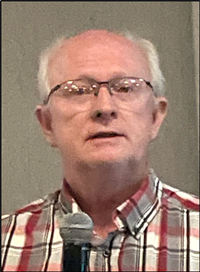
Jenks has spent the past four years studying other herbicides that might help control kochia. He shared some early results at the NSA’s Sunflower Research Forum in early January.
“The work that we've been doing is trying to find a product or products that will replace Roundup in a burndown situation,” Jenks relates. “If conditions aren't right for using Gramoxone, farmers have got to use something else to control kochia. We’ve been researching a couple of products that show very good promise for controlling kochia and other weeds.”
Obtaining a label for a new herbicide is a slow process. It takes many years to collect data on crop tolerance and weed efficacy to meet EPA registration requirements. Even though Jenks and his team are four years into the research, he suspects it will be another four or even five years before those alternatives are labeled.
In the meantime, Jenks says its important growers know for sure if they have Group 14-resistant kochia. The best way to find out: pick three to four leaves of a kochia plant in the spring and send them to the National Agricultural Genotyping Center in Fargo (www.genotypingcenter.com). They’ll run a free test. Within a week, growers have results that are key in planning the next step of weed control.
The Oberholtzers have started applying urea and Sonalan in the spring, just before they plant sunflower. Oberholtzer says applying that right before planting provides a longer window of coverage.
“We’ve had very clean sunflowers the last couple of years that we’ve been doing that,” Oberholtzer reports.
 While producers like Oberholtzer work to find ways to combat kochia, NDSU’s Jenks says there’s another weed that’s caught his attention.
Waterhemp is known for its prolific seed production and widespread resistance to common herbicides like glyphosate. It’s been a problem in eastern North Dakota for years, but the 2025 NDSU weed survey found waterhemp in 28 of the state’s 53 counties.
“Waterhemp is moving west,” Jenks affirms. “We’ve found it in Ward, McHenry, Pierce, Wells and Sheridan counties. We can’t let this get started in our minor crops, including sunflower. Corn and soybean growers have been dealing with this for years, but we don’t have the same options to control it in sunflower as they do in corn and soybeans.”
 |
|
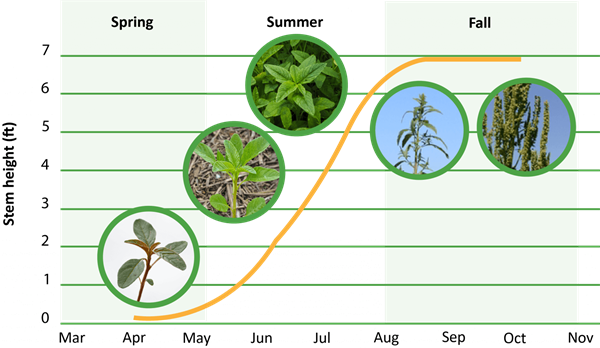
The seasonal lifecycle of a waterhemp plant, approximate in Illinois.
Source: Eric Miller, Southern Illinois Univ., and Mizzou ID Guide
|
Jenks explains that waterhemp is a pigweed, a cousin to Palmer Amaranth, which has also been reported in western counties as of late. Waterhemp tends to emerge in late May but often doesn’t rise above the canopy until August or September. Jenks says in sunflower, producers may not even see it until later in the growing season. It can grow up to seven feet tall. Jenks says the best way to prevent the spread of waterhemp is to be aware of what it is and not to combine through it.
“We have to get growers to be watching for it. If they find any, I encourage them not to combine through it. Rather, get out and pull the plants, because if you run your combine through 10 plants, next year you're going to have hundreds or thousands. That's how it spreads.”
Jenks says his office will be sharing information and photos throughout the winter, giving producers the tools to identify waterhemp early, and hopefully control the spread of another noxious weed. — Jody Kerzman
Click on the image below to open Dr. Carcedo's PowerPoint presentation.